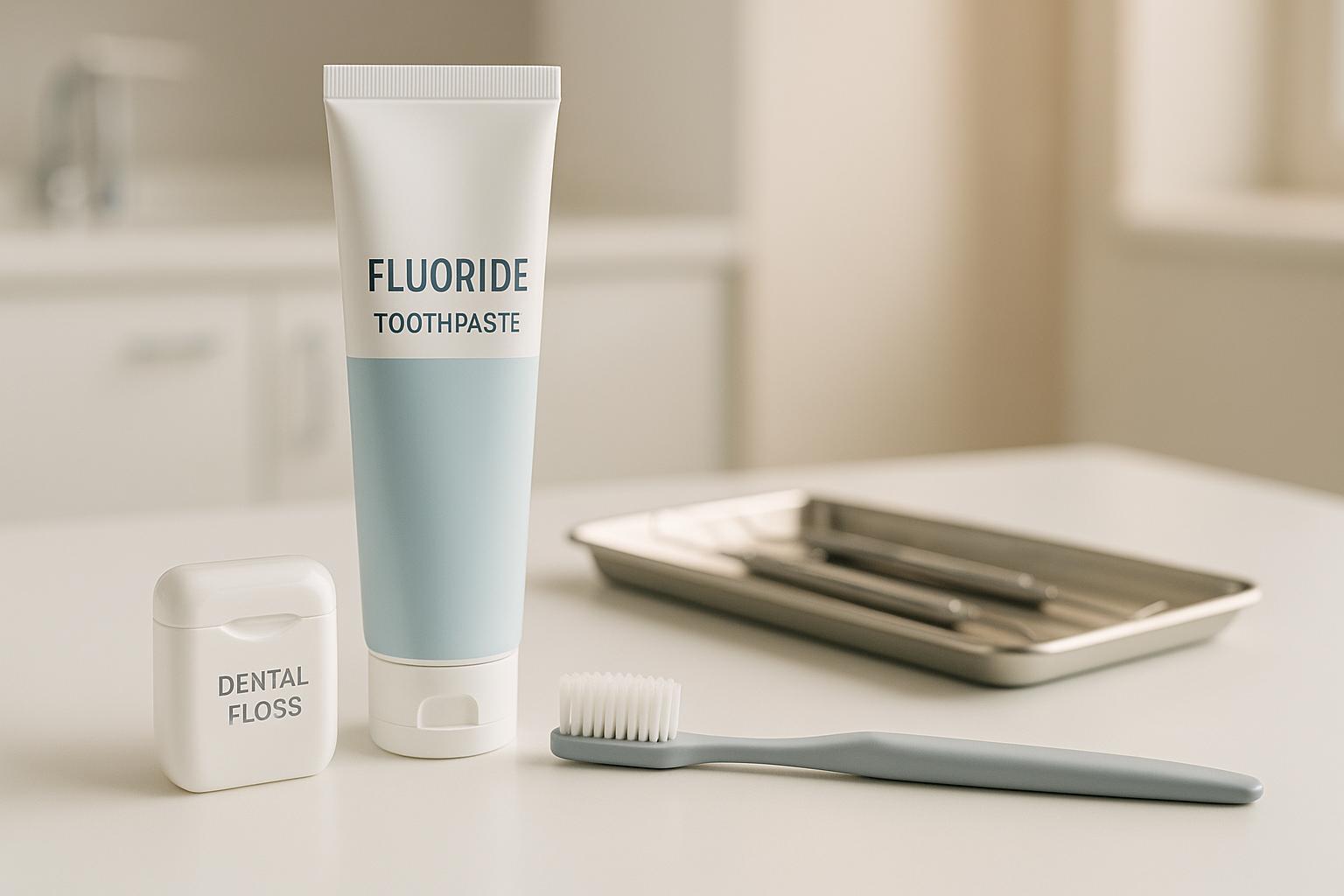
How to Evaluate Dental Products Before You Buy
Choosing dental products wisely can protect your patients, improve outcomes, and safeguard your practice's reputation. Here's how to make informed decisions:
- Patient Safety & Outcomes: Poor-quality products can lead to failed treatments, complaints, and negative reviews. Patients today expect evidence-based care and are quick to switch providers if dissatisfied.
- Financial Impact: Ineffective products waste time, money, and resources. They can also disrupt workflows and increase liability risks.
-
Evaluation Steps:
- Check Quality Standards: Look for ADA Seal of Acceptance, ISO, or FDA compliance. Avoid products with vague claims or no clinical data.
- Review Clinical Testing & Peer Feedback: Focus on independent studies with clear data. Use trusted dental journals and professional networks.
- Test Products in Practice: Use free sample programs to evaluate products during real procedures. Track performance, patient comfort, and workflow impact.
- Organize Findings: Create a comparison table to assess cost, durability, compatibility, and overall value. Tailor choices to your practice's specific needs.
- Negotiate Deals: Compare suppliers, check for discounts, and ensure you're buying from authorized distributors.
Key Tip: Balance quality with cost - skimping on essentials can hurt your practice. Use tools like spreadsheets to simplify decision-making and document findings for future purchases.
Dental Product Buying Guide | Step-by-Step Tips & All-in-One Dental Shopping Platform
Quality Standards in Dental Products
Quality standards act as a safeguard, ensuring that dental products meet essential safety and performance requirements. They help protect patient care and reduce unnecessary costs. While marketing materials often exaggerate claims, independent certifications and clinical testing provide reliable evidence of a product's quality. These standards form the foundation for recognizing trusted markers, such as the ADA Seal of Acceptance.
How to Identify ADA-Accepted Products
The ADA Seal of Acceptance is one of the most trusted indicators of quality in dentistry. Products with this seal have passed thorough laboratory and clinical testing to confirm their safety and effectiveness. To find ADA-accepted products, look for the seal on the packaging. Alternatively, you can visit the ADA's official website, which features a searchable database of accepted products. This database also outlines the specific claims manufacturers are permitted to make based on their testing.
For products without the ADA seal, check for compliance with ISO or FDA standards. Keep in mind that the ADA seal only applies to the claims that have been tested, so it’s essential to read the fine print to understand exactly what benefits have been verified.
Checking Clinical Testing and Peer Reviews
Clinical testing offers solid evidence of how a product performs in practical use. Look for products backed by peer-reviewed studies published in respected dental journals. When reviewing these studies, consider factors like sample size, study duration, and whether the research was funded by an independent source to ensure objectivity.
Review platforms and publications can also provide valuable insights by combining expert evaluations with user feedback. Choose review sources that are accredited by reputable organizations and that provide comprehensive assessments, covering aspects like functionality, performance, ease of use, and overall value. To get a balanced view, cross-check information across multiple sources, as individual reviews can sometimes be biased. Tailor your evaluation to your specific needs; for example, dentists may focus on technical details, while others might prioritize ease of use and patient comfort.
Be cautious of products that rely solely on unpublished studies, internal testing, or vague statements like "clinically proven" without offering detailed results. Manufacturers should be able to provide complete data or references to published studies to support their claims.
In addition, professional organizations like the Academy of General Dentistry and the American Academy of Pediatric Dentistry regularly release guidance, position papers, and product recommendations based on the latest evidence. Their expertise can help you identify products that align with best practices in various branches of dentistry.
Using Free Sample Programs for Hands-On Testing
Trying out products in your practice can help you see how they perform with your patients and fit into your workflow. Free sample programs are a great way to evaluate products without any upfront cost. While clinical standards and peer reviews are important, testing products firsthand can give you an even clearer picture of how they’ll work in your practice.
Where to Find Free Dental Samples
There are several ways to access free dental samples:
- Manufacturer websites: Many big brands offer free samples through their professional portals. For example, Colgate Professional provides free samples to dental hygienists and other professionals via their website (you’ll need to log in to place an order). Similarly, Haleon Health Partner offers free samples to verified dental and medical professionals, shipping only to office addresses in select U.S. states (excluding Alaska, Hawaii, and Vermont).
- Professional partnership programs: Some companies combine free samples with educational resources. The LISTERINE® Pro Partners program, run by Kenvue, sends quarterly patient samples of LISTERINE® along with educational materials for dental hygiene. To participate, you’ll need to sign up, read quarterly emails, click through to an article, and complete a short quiz.
- Dental supply distributors: Distributors like Optimus Dental Supply have a "Free Samples" section on their website, offering items like burs and specialized rubber products. Verification of your practice name and address is usually required to place an order.
- Manufacturer-direct programs: Companies that make specialized products often offer samples tailored to your practice. For instance, TePe USA provides samples of interdental brushes, toothbrushes, and specialty brushes based on your area of dentistry. Single Use Dental Instruments offers samples of sterile, single-use tools to help evaluate their efficiency and infection control benefits.
- Industry aggregator platforms: These platforms gather free sample offers from multiple vendors. Dentistry IQ, for example, highlights free samples from third-party vendors and directs dental professionals to claim them on vendor websites. Platforms like Free Dental Samples for Professionals connect dentists with suppliers offering trial kits in areas like restorative, preventive, whitening, adhesives, prosthetics, and orthodontics.
Some programs go beyond just the products. The Dental Herb Company, for instance, provides not only free samples of their natural oral care products but also informational packets and team training webinars with a Clinical Trainer. Keep in mind that most programs require verification of your professional status, so you may need to provide your dental license, practice name, and office address. Samples are generally shipped only to verified professionals.
How to Test Products Effectively
Getting samples is just the beginning. The real value lies in testing them systematically to gather useful insights. Start by identifying the specific problems you’re trying to solve - whether it’s improving patient comfort, streamlining procedures, or finding allergen-free options. Having clear goals will help you focus on the features that matter most.
Test products during real patient procedures rather than in isolation. For example, when trying out items like Wonderful Fluoride Varnish or Prophy Paste, pay attention to their application smoothness, adhesion, and overall handling.
Keep track of your observations in a simple spreadsheet over a trial period (usually two to four weeks). Note details like patient comfort (including taste preferences), ease of use, and how the product affects your workflow. Consider preparation time, application duration, and cleanup requirements - some products may work well clinically but create delays in your schedule.
Compare the samples against your current products using the same criteria. If you’re testing multiple alternatives, try using them with different patients or appointments to make fair comparisons. Involve your entire team, including dental assistants and front desk staff, to gather a variety of perspectives that you might not notice on your own.
Once your trial period ends, cross-check your findings with independent clinical evaluations. Resources like Dental Advisor provide ratings and highlight "Top and Preferred Products" in various categories, offering unbiased performance data to support or challenge your observations.
Finally, organize your findings in a way that’s easy to reference for future purchasing decisions. A simple spreadsheet listing product names, testing dates, key observations, team feedback, and final ratings can be a valuable tool for comparing products both now and later. These organized notes will make it much easier to evaluate and choose products when the time comes.
Comparing Dental Products Across Key Factors
When it comes to evaluating dental products, a hands-on and structured approach makes all the difference. By focusing on critical factors like clinical performance and cost-effectiveness, you can make informed choices that bring real value to your practice. A structured comparison not only ensures quality and efficiency but also helps you avoid costly mistakes, aligning your product selections with the unique needs of your practice.
Building a Product Comparison Table
Once you've gathered insights from hands-on testing, the next step is to organize your findings into a comparison table. This tool transforms raw observations into actionable insights. Key columns to include are:
- Product Name and Manufacturer
- Unit Cost
- Clinical Performance (rated 1–10 based on factors like function, adhesion, ease of application, and longevity)
- Patient Comfort (considering taste, texture, and sensitivity)
- Durability
- Equipment Compatibility
- Overall Value
To calculate cost per use, factor in the unit price, shipping fees, minimum order quantities, and any volume discounts. Many manufacturers offer tiered pricing, such as a 10% discount on orders over $500 or 15% off for purchases exceeding $1,000. By comparing costs this way, you can uncover the true value of each product.
For clarity, create separate tables for different product categories. For example:
- Preventive Products: Toothpastes, fluoride varnishes, and sealants.
- Restorative Materials: Composites, cements, and bonding agents.
- Instruments and Equipment: Burs, scalers, and curing lights.
This approach allows you to focus on category-specific attributes. For instruments like scalers, track how many uses you get before performance declines. For consumables like impression materials, note shelf life and how long they remain viable after opening.
Equipment compatibility is another critical factor. For example, if you're evaluating a curing light, ensure it works seamlessly with the composite resins you already use. Check specifications like wavelength, curing times, and whether protocol adjustments will be necessary. Similarly, when assessing digital impression systems, confirm compatibility with your lab's CAD/CAM software to avoid extra costs like adapters or workflow disruptions.
Matching Products to Your Practice Needs
Even the highest-rated products might not suit every practice. The key is tailoring your choices to your specific needs, which can vary based on your patient demographics, procedure types, and team dynamics.
Start by considering your patient population. For example, a pediatric practice may prioritize kid-friendly flavors and textures, while a practice serving elderly patients might focus on products that address dry mouth or are gentle on sensitive tissues. If your practice serves a diverse community, factor in dietary restrictions or allergies, such as gluten-free or vegan options.
Your procedure mix should also guide your decisions. A practice performing frequent composite restorations will benefit from materials that cure quickly, polish easily, and offer excellent shade matching. On the other hand, if whitening treatments are rare in your office, investing in premium whitening systems might not make sense. Assess how often you'll use each product to determine if the cost is justified.
Workflow efficiency is another consideration. Solo practitioners might prioritize products that save chair time, even if they're slightly more expensive, as this allows them to see more patients. Larger practices, however, might lean toward products that standardize procedures across the team, ensuring consistent quality regardless of who performs the work.
While budget constraints are a factor, focusing solely on the cheapest options can backfire. Instead, identify your non-negotiables - features you absolutely need - and your nice-to-haves, which are optional but beneficial. For instance, ADA acceptance might be a must-have for preventive products, while packaging size could be more flexible.
Don't overlook storage and handling requirements, especially if your practice has limited space. Some products need refrigeration, which could be tricky if your fridge is already crowded. Others might have short working times once mixed, making them less practical if you're often interrupted. Single-dose packaging, though pricier, can reduce waste and contamination risks.
Training requirements are another hidden cost to consider. A product that demands extensive training or has a steep learning curve might not be worth the investment, even if it performs slightly better. Look for options with accessible training resources, like free webinars or on-site demos, to minimize disruption.
Finally, think about scalability. If you're planning to expand your practice or add new services, choose products that can grow with you. Bulk purchasing options, reliable supplier relationships, and consistent availability become more important as your practice evolves. Platforms like Free Dental Samples for Professionals can help you explore trial kits across categories - restorative, preventive, whitening, adhesives, and more - making it easier to find products that meet both your current and future needs.
To stay organized, create a reference sheet documenting your practice's priorities. Update this "living document" as your practice evolves, ensuring your purchasing decisions remain aligned with your actual needs rather than external pressures or marketing claims.
sbb-itb-9fc6c7c
Getting Feedback from Patients and Professionals
Blending patient feedback with testing data is a smart way to understand how your product performs in everyday use.
Collecting Patient Feedback During Trials
When evaluating new products, patient input is key. Use structured surveys to gather their thoughts on factors like comfort, taste, and overall satisfaction. Alongside this, clinical measurements provide hard data. For instance, tools like the Turesky Plaque Index can measure plaque reduction, the Calculus Index tracks tartar buildup, and the VITA Easyshade® V helps document tooth shade changes. It’s also important to keep an eye out for any signs of gingival irritation or other adverse effects, noting them carefully.
Asking Professional Networks for Input
Professional opinions add another layer of understanding. Reach out to trusted colleagues to hear their experiences with the product’s performance and safety. Combining their insights with your clinical findings can help you spot patterns and make informed decisions about your next steps.
Making the Final Purchase Decision
After thoroughly evaluating your options, it’s time to finalize your purchase plan. By organizing your findings and approaching the decision systematically, you’ll be better positioned to secure the best deal for your needs.
Recording Your Evaluation Results
Start by defining your key criteria - think budget, must-have features, and specific practice requirements. Use a simple spreadsheet to track essential details like product name, supplier, unit price, clinical performance, patient satisfaction, and any adverse effects. This setup provides an easy way to compare options side by side.
When reviewing suppliers, aim to evaluate at least three for each product. This approach helps you identify the best value - not just the lowest price. A product may seem cheaper overall but could cost more per unit, especially if purchased in smaller quantities.
Don’t forget to account for hidden costs like shipping, handling, and taxes, which can significantly impact the final price. Additionally, consider refund policies to ensure you have flexibility. For example, a product with free shipping might ultimately save you more than one with a lower base price but high delivery fees.
If you’re considering bulk orders, weigh the potential savings against the risk of overstocking. For new products, it’s usually safer to start with smaller quantities.
Finally, confirm that your suppliers are authorized distributors. This ensures you’re purchasing genuine products, backed by warranties, and with reliable shipping timelines. If your practice manages multiple suppliers and products, investing in purchasing software can simplify cost analysis and streamline your ordering process.
With a clear understanding of costs and options, you can now focus on maximizing savings.
Getting Discounts and Bulk Purchase Options
Use your evaluation data to negotiate better prices and explore discounts. Many suppliers offer price-matching policies, so don’t hesitate to ask if they’ll match a competitor’s lower price. This can be a quick way to secure savings while sticking with a trusted supplier.
Look into professional discounts specifically for dental practitioners. For instance, platforms like Free Dental Samples for Professionals not only provide trial products but also offer exclusive discounts once your credentials are verified. These discounts often apply across a wide range of product categories.
Another tip? Check the "Promotions" sections on websites like Dental Product Shopper (DPS). These pages frequently feature limited-time deals, seasonal discounts, and special offers that can significantly cut costs. Setting aside a few minutes each month to browse these sections can lead to meaningful savings.
Conclusion
When it comes to choosing dental products, the decision should go far beyond just looking at the price tag. Prioritizing quality and value plays a major role in ensuring patient satisfaction and protecting your practice. Programs like the ADA Seal of Acceptance provide a reliable benchmark for safety. With over 400 over-the-counter dental products currently carrying this seal, it's clear that consumers trust and consider it when making purchasing decisions.
By following a thorough evaluation process - like the one outlined in this guide - you can make well-informed decisions before committing your resources. This approach includes everything from product testing to gathering feedback, giving you a full understanding of what you're investing in. Skipping these steps could lead to using unverified products, which not only risks clinical outcomes but also shifts liability directly onto you as the practitioner.
It's important to lean on solid scientific evidence from peer-reviewed studies and independent evaluation reports instead of relying solely on sales pitches. Resources such as the Clinicians Report and The Dental Advisor offer detailed assessments based on real-world performance, saving you time and effort. Always ask manufacturers for specific evidence and details about their testing methods.
Additionally, platforms like Free Dental Samples for Professionals allow you to test products firsthand and even provide discounts after verifying your credentials. By recording your findings and comparing options from at least three suppliers, you can make choices that not only improve your practice's efficiency but also enhance patient care. These systematic evaluation habits ensure immediate benefits while paving the way for long-term clinical success.
Taking the time to evaluate your tools properly means better clinical results, less waste, and greater confidence in the products you use every day.
FAQs
How can I make sure the dental products I buy are safe and high-quality?
When choosing dental products, prioritize those with the ADA Seal of Acceptance. This seal guarantees the product has undergone rigorous evaluation to confirm its effectiveness and safety. It's also essential to verify that the product adheres to FDA regulations, which address key aspects like biocompatibility and sterility.
You might also consider trying free sample programs. These allow you to evaluate products in practical, everyday settings before committing to a purchase, ensuring they align with your professional standards and requirements.
What are the best ways to evaluate dental products before purchasing for my practice?
When it comes to evaluating dental products, a great first step is to request free samples from manufacturers or suppliers. This gives you the chance to try out products directly in your practice before making any financial commitment. Take the time to compare different sample programs to see which ones provide the best options for your specific needs. Also, don’t overlook the value of feedback from fellow dental professionals - learning about their experiences can offer valuable insights into a product’s performance and reliability. By combining these approaches, you can make smarter decisions that suit your practice.
How can I choose dental products that offer the best balance between cost and quality for my practice?
Finding the right mix of cost and quality for dental products doesn't have to be overwhelming. Start by looking into the reputation of both the product and its manufacturer. Read reviews from fellow dental professionals and check for industry certifications. These steps can help you gauge the product’s performance and dependability.
Another smart move is to explore free sample programs or trial offers. Trying out products in your practice gives you a hands-on way to assess their effectiveness before making a financial commitment. Compare these options to see which ones provide the most value and flexibility.
Lastly, think about the long-term value of what you're buying. Sometimes, spending a bit more upfront can pay off if the product is more durable or streamlines your workflow. Factor in potential savings on time, effort, and replacement costs when making your choice.


